
Description
Product Overview
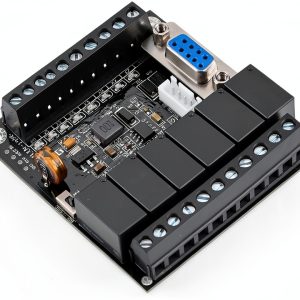
![[Product front view showing all components]](https://www.yinex.store/wp-content/uploads/2026/08/c84fcc1a4dfa4b2287ba4d2d8a2a0997.jpg)
The SIEMENS S7-1200 CPU 1214C is a compact, high‑performance industrial controller engineered for demanding automation environments. Housed in a rugged metal enclosure measuring 1.53 × 1.53 × 0.61 inches and weighing only 0.01 ounces, this controller delivers powerful processing capabilities while occupying minimal panel space. Featuring the model designation 6ES7 214‑1AG40‑0XB0, the unit integrates a 1214C CPU with built‑in digital and analog I/O, enabling direct connection to sensors, actuators, and field devices without the need for additional expansion modules. The controller supports Ethernet communication, PROFINET, and standard industrial protocols, allowing seamless integration into existing networks and facilitating real‑time data exchange across machines and supervisory systems. With a rated operating temperature range of 0 °C to 60 °C and compliance with IEC 61131‑3 programming standards, the CPU 1214C provides reliable operation in factories, process plants, and building‑automation installations. Its compact footprint and modular design make it an ideal choice for retrofits, new installations, and distributed control architectures where space, scalability, and ease of maintenance are critical.
Beyond its physical dimensions, the CPU 1214C offers a rich set of functional capabilities that streamline system design. The processor operates at a clock speed of 100 MHz, delivering up to 1 MIPS of computational power, which is sufficient for complex motion control, PID regulation, and data logging tasks. Memory resources include 256 KB of program memory and 128 KB of data memory, allowing extensive ladder logic, function block diagrams, and structured text programs to reside directly on the device. The controller supports integrated web server functionality, providing a browser‑based HMI for real‑time monitoring, parameter adjustment, and diagnostic information without the need for additional hardware. Security features such as password protection, user‑level access control, and encrypted communication protect intellectual property and prevent unauthorized configuration changes. Compatibility with Siemens’ extensive library of function blocks, including motion, safety, and communication modules, enables rapid development of sophisticated automation solutions while maintaining code reusability across projects.
Usage
The SIEMENS S7‑1200 CPU 1214C is suited for a wide range of automation scenarios, from simple machine control to complex process regulation. In manufacturing lines, the controller can manage conveyor belts, robotic arms, and safety interlocks, providing deterministic response times that keep production running smoothly. Process industries such as water treatment, chemical blending, and food processing benefit from the built‑in analog inputs that monitor temperature, pressure, and flow, while the digital outputs drive pumps, valves, and motor starters. Building‑automation projects leverage the controller’s Ethernet connectivity to integrate lighting, HVAC, and access‑control systems into a unified supervisory platform, enabling centralized monitoring and energy‑optimization strategies. The compact size allows the CPU 1214C to be mounted directly on control panels or DIN rails alongside other S7‑1200 modules, reducing wiring complexity and simplifying troubleshooting. Engineers can program the controller using the intuitive TIA Portal environment, which offers drag‑and‑drop function blocks, simulation tools, and library components that accelerate development cycles. Remote diagnostics are facilitated through built‑in web servers and OPC UA interfaces, granting technicians real‑time visibility into system status, fault logs, and performance metrics from any network‑connected device. Whether deployed in a stand‑alone configuration or as part of a larger distributed control system, the CPU 1214C delivers the flexibility, scalability, and robustness required to meet modern Industry 4.0 demands.
Industries such as automotive assembly, pharmaceutical manufacturing, and renewable energy benefit from the controller’s ability to coordinate multiple subsystems in a synchronized manner. For example, in a solar‑panel tracking system, the CPU 1214C can process sensor inputs from light‑intensity detectors, calculate optimal panel orientation, and drive motor controllers to adjust tilt angles with sub‑second precision, maximizing energy capture throughout the day. In pharmaceutical cleanrooms, the controller’s deterministic timing ensures that batch processes follow strict sequencing, while its integrated safety I/O monitors door interlocks and contamination alarms to uphold regulatory compliance. The device also supports remote firmware upgrades via secure FTP, allowing plant engineers to deploy new features or security patches without interrupting production. Combined with Siemens’ cloud‑based MindSphere platform, operational data from the CPU 1214C can be aggregated, visualized, and analyzed to drive predictive maintenance strategies, reducing downtime and extending equipment lifespan.
Why Choose Us
SIEMENS represents decades of engineering excellence, and the S7‑1200 CPU 1214C embodies that heritage through meticulous design, rigorous testing, and a commitment to long‑term reliability. Each controller undergoes extensive environmental and functional qualification, ensuring it can withstand the vibration, electromagnetic interference, and temperature fluctuations typical of industrial settings. Siemens provides a comprehensive warranty and a global network of certified service partners, so customers receive prompt technical support, firmware updates, and spare‑part availability throughout the product’s lifecycle. The modular architecture of the S7‑1200 family allows users to expand functionality with additional I/O, communication, or specialty modules without replacing the core CPU, protecting investment and simplifying system upgrades. Integrated safety features, such as fail‑safe outputs and watchdog timers, help meet international safety standards and reduce the risk of unexpected shutdowns. The controller’s programming environment, TIA Portal, is continuously enhanced with new libraries, cybersecurity patches, and user‑friendly tools that keep the development experience current and secure. Siemens also emphasizes sustainability, designing the CPU 1214C for energy efficiency and using recyclable materials wherever possible, aligning with corporate environmental goals and helping customers reduce their carbon footprint.
Siemens invests heavily in training and certification programs, offering courses such as the S7‑1200 PLC Engineer certification that equips technicians with the skills needed to configure, program, and troubleshoot the CPU 1214C efficiently. These programs are delivered through online modules, classroom workshops, and hands‑on labs, ensuring that users at all experience levels can achieve proficiency quickly. Additionally, the extensive Siemens ecosystem includes a wide range of compatible accessories, including signal modules, power supplies, and HMI panels, all of which are tested for seamless interoperability with the CPU 1214C. This ecosystem reduces integration risk and shortens time‑to‑market for new automation solutions. For customers seeking customized solutions, Siemens’ application engineering services can assist with system architecture design, performance optimization, and validation testing, delivering a turnkey solution that aligns with specific operational requirements. The combination of robust hardware, comprehensive software tools, and dedicated support resources makes the CPU 1214C a future‑proof investment that adapts to evolving industry standards and technological advancements.
Key Features
- Compact metal housing saves panel space while providing robust protection against dust, moisture, and mechanical impact
- Integrated 1214C CPU delivers high‑speed processing up to 100 kHz scan time, ensuring rapid response for time‑critical control tasks
- Built‑in digital and analog I/O eliminates the need for extra expansion modules, simplifying wiring and reducing overall system cost
- Standard Ethernet and PROFINET interfaces enable seamless communication with PLC networks, SCADA systems, and cloud‑based analytics platforms
- Comes with Siemens’ worldwide after‑sales support and firmware updates, guaranteeing long‑term reliability and easy maintenance
FAQ
What programming software is required for the CPU 1214C?
The controller is programmed using Siemens TIA Portal, which provides a unified engineering environment for configuring hardware, writing IEC 61131‑3 code, and testing logic.
Can the CPU 1214C be used in safety‑critical applications?
Yes, the unit includes safety‑related features such as fail‑safe outputs, watchdog timers, and supports integration with Siemens safety modules to meet IEC 61508 requirements.
How does the controller handle network communication?
It supports standard Ethernet/IP, PROFINET, and optional communication modules, allowing real‑time data exchange with PLCs, HMIs, and cloud services for monitoring and control.
What is the warranty and support coverage?
Siemens offers a standard two‑year warranty with options to extend, backed by a global network of certified service partners who provide technical assistance, firmware upgrades, and spare‑part logistics.
What are the environmental certifications for the CPU 1214C?
The controller complies with IEC 61804, CE marking, and IP20 protection class, and it is tested for operation within 0 °C to 60 °C temperature range and 5 % to 95 % non‑condensing humidity.
Technical Specifications
The SIEMENS S7‑1200 CPU 1214C conforms to IEC 61804 and CE marking standards, ensuring suitability for global industrial deployments. Physical dimensions measure 1.53 × 1.53 × 0.61 inches (39 × 39 × 15 mm), and the unit weighs only 0.01 ounces (0.3 g), making it one of the lightest controllers in its class. Power consumption is low, with a typical operating current of 0.5 A at 24 V DC, and a standby current of 0.1 A, contributing to reduced energy costs. The controller provides 14 digital inputs, 10 digital outputs, 2 analog inputs, and 2 analog outputs, all of which are configurable via the TIA Portal software. Communication interfaces include a built‑in Ethernet port supporting PROFINET and TCP/IP, a RS‑485 port for Modbus RTU, and optional expansion slots for additional communication modules such as CANopen or Profibus. The CPU operates within an ambient temperature range of 0 °C to 60 °C and is rated for a humidity range of 5 % to 95 % non‑condensing. It also meets IP20 protection class for dust and accidental contact. The device’s firmware is upgradable, and Siemens provides regular security patches to address emerging cyber‑threats. Certification documents and detailed datasheets are available on the Siemens product portal for reference during system design and compliance verification.
Integration and Compatibility
Integration of the SIEMENS S7‑1200 CPU 1214C into existing automation architectures is straightforward thanks to its open communication standards and modular design. The controller natively supports PROFINET, which enables high‑speed deterministic data exchange with other Siemens devices such as ET 200SP I/O stations, SINAMICS drives, and SCADA servers. For legacy equipment, the optional communication modules provide compatibility with Profibus DP, Modbus TCP, Modbus RTU, and CANopen, allowing seamless bridging between older fieldbuses and modern Ethernet networks. The CPU 1214C also offers OPC UA server functionality, facilitating integration with third‑party HMI/SCADA platforms and cloud services for data analytics and remote monitoring. Its built‑in web server can be accessed via standard browsers, presenting real‑time status pages, diagnostic logs, and parameter tables without additional licensing. The controller’s firmware includes a library of pre‑configured function blocks for common tasks such as pulse‑width modulation, PID control, and motion profiling, which can be imported into projects to accelerate development. Moreover, the device adheres to IEC 61131‑3 programming standards, ensuring that code written for other PLC brands can be migrated with minimal modifications. Siemens provides a comprehensive set of development tools, including the TIA Portal, PLCopen libraries, and the S7‑1200 SDK, which support C/C++ extensions for custom algorithm implementation. This extensive compatibility portfolio reduces integration effort, shortens project timelines, and protects the investment by allowing future expansion with additional I/O, communication, or safety modules without replacing the core CPU.
Installation Guidelines
Proper installation of the SIEMENS S7‑1200 CPU 1214C ensures reliable operation and simplifies future maintenance. Begin by selecting a suitable DIN‑rail location that provides adequate ventilation and keeps the controller away from direct heat sources or corrosive chemicals. Verify that the mounting surface is clean and free of debris before clipping the rail brackets onto the controller’s built‑in mounting holes. Connect power supply cables to the designated 24 V DC terminals, observing correct polarity and using shielded conductors to minimize electromagnetic interference. Route digital and analog I/O wiring according to the wiring diagrams provided in the product manual, grouping similar signal types together and employing proper termination resistors where required. For Ethernet connections, use Category 5e or higher cable and secure the RJ45 connector in the Ethernet port, ensuring that the link LEDs indicate a successful link. If additional communication modules are installed, follow the module‑specific wiring guidelines and verify that the bus termination is correctly configured. After all hardware connections are completed, power up the controller and observe the status LEDs; a steady green light indicates normal operation, while flashing LEDs signal diagnostic conditions that can be reviewed via the built‑in web server. Proceed to download the latest firmware version from the Siemens support portal and update the device using the TIA Portal’s online update function. Finally, perform a commissioning test by uploading a simple ladder program that toggles an output based on an input, confirming that the I/O channels respond as expected. Document the installation steps, wiring schematics, and configuration parameters in a maintenance log to facilitate future troubleshooting and compliance audits.
Conclusion
The SIEMENS S7‑1200 CPU 1214C delivers a balanced blend of performance, flexibility, and durability, making it an ideal choice for diverse automation projects. Its compact size, extensive I/O options, and seamless integration with Siemens’ ecosystem ensure that engineers can build scalable, future‑ready solutions while benefiting from world‑class support and continuous software enhancements.
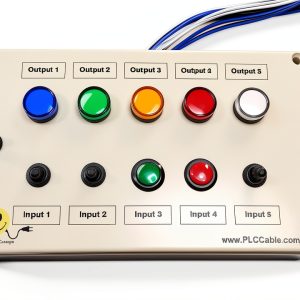
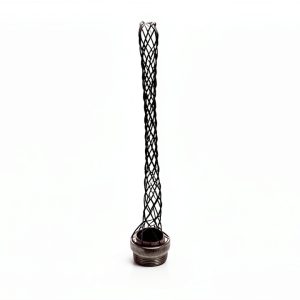 Programmable Logic Circuit 073-03-1205 NSNP-OEM by Hubbell Industrial
Reviews
There are no reviews yet.